Scottish Government introduces mandatory oversight for major AI data centre developments
New planning direction requires local authorities to notify ministers of proposed AI data centres exceeding 50 megawatts within seven days of validation.

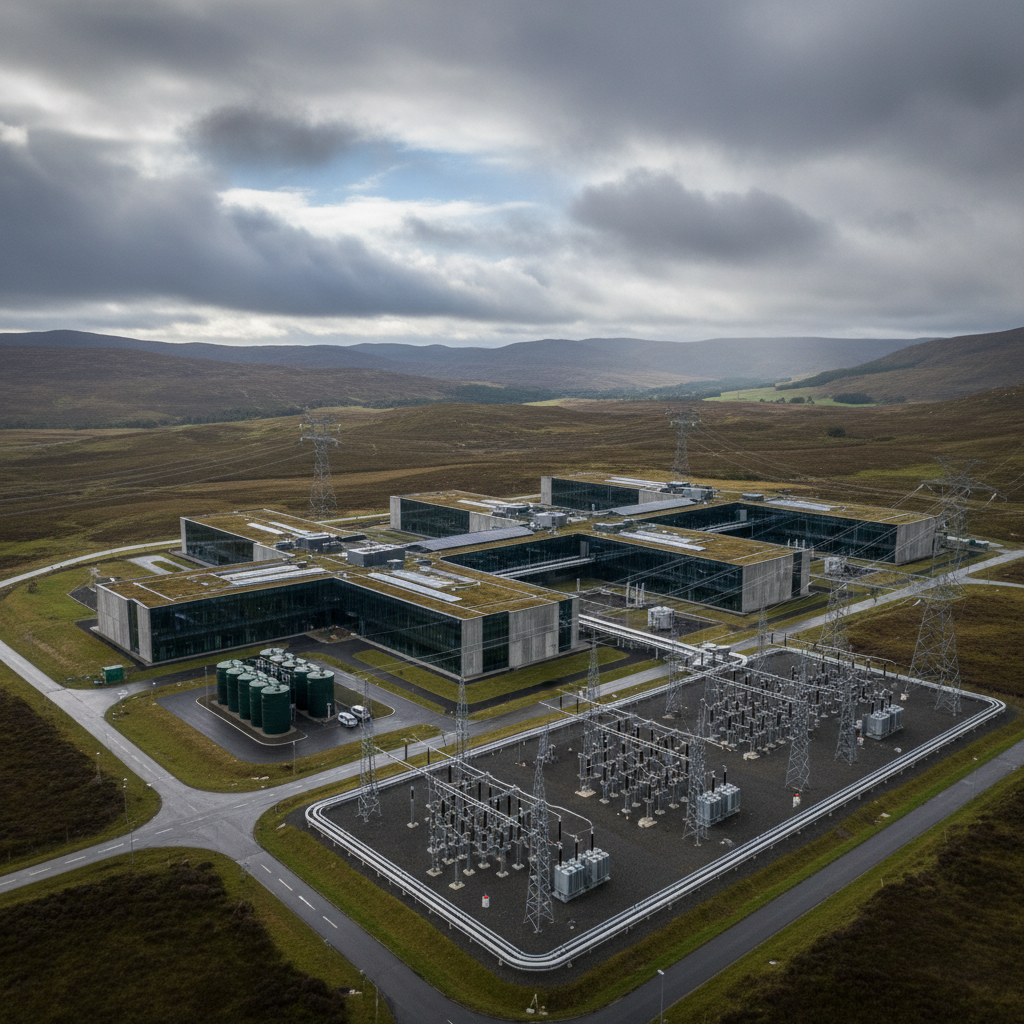
The Scottish Government has introduced mandatory ministerial oversight for large-scale artificial intelligence data centre developments, requiring local planning authorities to notify ministers within seven days of validating any application exceeding 50 megawatts of power capacity.
The planning direction, issued on 17 August 2026 under Regulation 31 of the Town and Country Planning (Development Management Procedure) (Scotland) Regulations 2013, takes immediate effect and applies to both new applications and those currently under consideration by planning authorities.
Immediate Requirements for Planning Authorities
Chief Planner Dr Fiona Simpson formally communicated the new rules to planning officials across Scotland, mandating that authorities must submit full copies of plans and supporting documents alongside their notification to ministers. The seven-day notification window begins from the moment applications are validated by local planning departments.
Planning authorities must now treat AI data centre proposals with power capacities above the 50-megawatt threshold as developments of national significance, triggering enhanced scrutiny from the Scottish Government before local decisions can proceed. The notification must include detailed technical specifications, environmental assessments, and projected infrastructure requirements for each proposed facility.
Local authorities will need to establish new administrative procedures to identify qualifying applications during their initial validation process, ensuring compliance with the tight seven-day reporting deadline. This represents a significant shift in how Scotland's 32 local planning authorities handle major technology infrastructure proposals.
Specific Developments Under New Oversight
The direction immediately affects proposed AI data centres at Wester Hermiston in Edinburgh and Auchtertool in Fife, both of which now require full Environmental Impact Assessments as part of their planning submissions. These developments represent the scale of AI infrastructure investment currently targeting Scotland's planning system.
The Edinburgh proposal at Wester Hermiston involves a facility designed to support machine learning operations requiring substantial electrical grid connections and advanced cooling systems. The Auchtertool development in Fife similarly targets high-performance computing applications that distinguish these facilities from conventional commercial data centres.
The 50-megawatt threshold captures large-scale facilities that typically require substantial electrical grid connections and cooling systems, distinguishing them from smaller commercial data centres that have operated under standard planning procedures. For comparison, a 50-megawatt facility consumes roughly the same amount of electricity as 37,500 average Scottish homes.
Response to AI Infrastructure Boom
The Scottish Government's intervention addresses what officials describe as an AI-driven data centre boom, with multiple large-scale proposals emerging across Scotland as technology companies seek locations for power-intensive artificial intelligence computing facilities.
Industry analysts note that Scotland's combination of cooler climate, renewable energy resources, and existing digital infrastructure makes it attractive for AI data centre investment. The country's wind and hydroelectric capacity provides the clean energy sources increasingly demanded by technology companies for their computing operations.
The new oversight mechanism allows ministers to assess cumulative impacts of major AI infrastructure on Scotland's electrical grid, environmental resources, and local communities before individual planning authorities make approval decisions. This coordination becomes critical as multiple large-scale facilities could strain regional power distribution networks.
Data centres supporting AI operations typically require significantly more electrical power than traditional server facilities, creating infrastructure demands that extend beyond individual local authority boundaries and into national energy planning considerations. Modern AI training facilities can consume 10 to 50 times more power per server rack than conventional data centres.
Planning Process Changes and Industry Impact
Under the new direction, local planning authorities retain their decision-making powers but must pause processing of qualifying applications until ministers have reviewed submitted documentation and provided any guidance on national policy considerations.
The requirement for full Environmental Impact Assessments on affected projects will examine power consumption, cooling water usage, traffic impacts, and effects on local electrical grid capacity. These assessments must now address the specific environmental challenges posed by AI computing, including heat generation and water usage for cooling systems.
Technology industry representatives have expressed concerns about potential delays in the planning process, though the government maintains that early ministerial involvement will ultimately streamline approvals by addressing national infrastructure considerations upfront. The seven-day notification requirement aims to balance rapid government review with continued local authority autonomy.
Strategic Implications for Scotland's Digital Future
The immediate implementation of oversight rules suggests the Scottish Government anticipates continued growth in AI data centre proposals requiring coordination with national infrastructure planning and energy policy objectives, according to The National's report on the government intervention.
Planning authorities will need to adjust their validation procedures to identify qualifying AI data centre applications and establish notification protocols with Scottish Government planning officials within the seven-day requirement. This may require additional training for planning staff to recognise the technical specifications that distinguish AI facilities from conventional data centres.
The direction positions Scotland to manage AI infrastructure development strategically whilst maintaining local planning authority roles in assessing individual proposals against community and environmental considerations. The government's approach reflects growing recognition that AI data centres represent a distinct category of infrastructure requiring national-level coordination.
Future proposals will need to demonstrate alignment with Scotland's renewable energy targets and digital infrastructure strategy, potentially creating new standards for sustainable AI computing facilities across the country.