England declares flash drought as wildfire incidents surge across Britain
More than half of England now under drought conditions with over 200 wildfire incidents recorded in two weeks. Officials warn of sustained dry conditions into August.

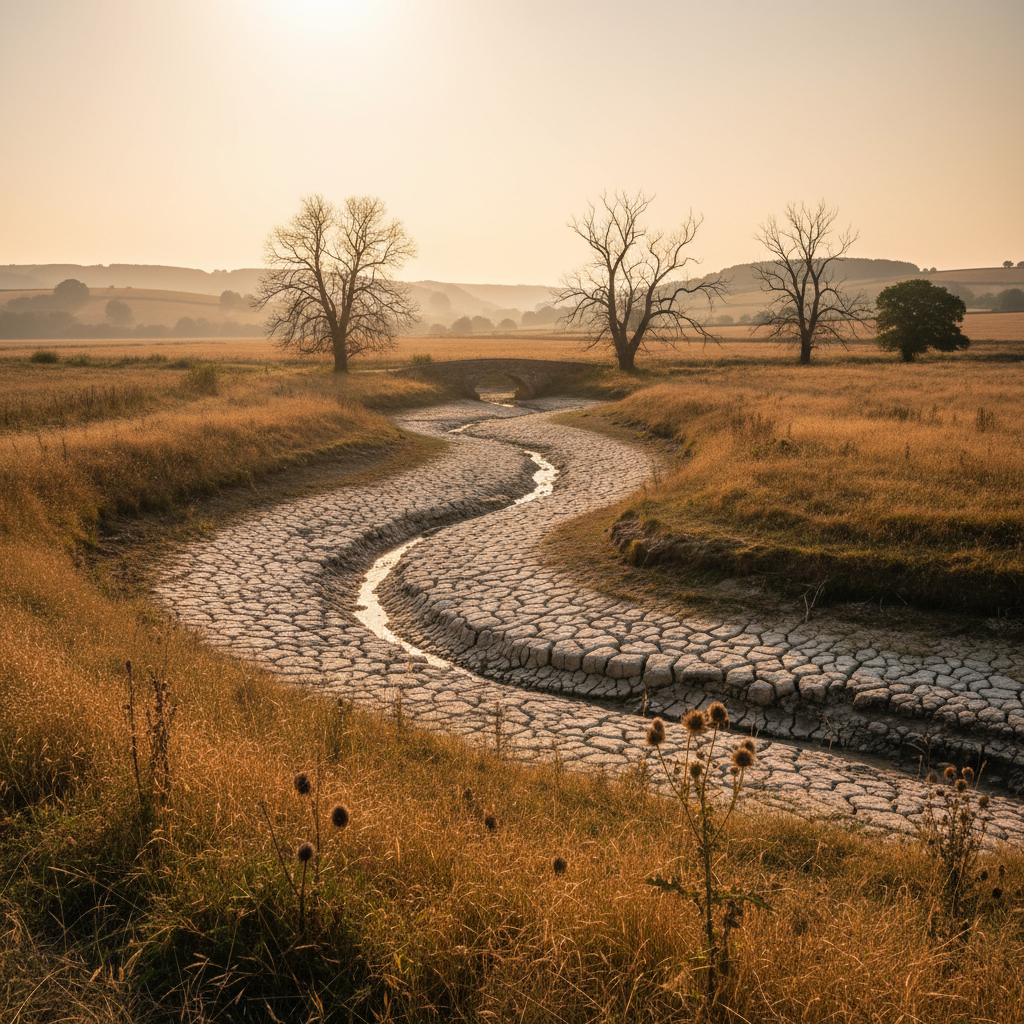
The Environment Agency formally declared more than half of England in drought on 30 July, describing conditions as a rapidly developing "flash drought" driven by weeks of extreme heat and minimal rainfall. Over 20 million people are now under hosepipe bans as river flows drop to critical levels and vegetation becomes tinder-dry across the country.
The drought declaration comes as wildfire incidents escalate dramatically across England and Wales. The National Fire Chiefs Council reports more than 200 wildfire incidents over the past fortnight, with 208 fires recorded between 16 and 28 July alone. Several major blazes have erupted, including one in Suffolk covering an area equivalent to 200 football pitches.
Water restrictions tighten as conditions worsen
Hosepipe bans now affect millions of households as water companies struggle with declining reservoir levels and reduced river flows. Farmers across affected regions are harvesting crops early to salvage what they can from parched fields, whilst soils have become critically dry in many areas.
The Environment Agency's drought classification triggers enhanced monitoring protocols and potential further water use restrictions if conditions persist. Water companies are implementing contingency plans developed following previous drought events, though officials acknowledge the speed of deterioration has caught many by surprise.
Thames Water, serving 15 million customers across London and the South East, has activated its drought management protocols earlier than anticipated this year. The company reports reservoir levels at Farmoor dropping to 65% capacity, well below the 85% typically expected for late July. Similar patterns emerge across other major suppliers, with Anglian Water reporting groundwater levels in East Anglia at their lowest point since records began in 1976.
Fire services stretched as incidents multiply
Fire and rescue services across England and Wales report unprecedented demand as dry vegetation creates perfect conditions for rapid fire spread. The 208 wildfire incidents recorded in less than two weeks represents a sharp increase from typical summer levels, straining resources and requiring mutual aid between services.
Rural fire crews, already operating with limited resources, face particular challenges as access roads become impassable and water sources dry up. The Suffolk blaze, covering territory the size of 200 football pitches, required coordination between multiple fire services and highlighted the scale of incidents now occurring.
Devon and Somerset Fire and Rescue Service reports deploying specialist wildfire units to 47 separate incidents since mid-July, compared to just 12 for the entire summer period last year. Chief Fire Officer Lee Howell described the situation as "unprecedented in recent memory", with crews working extended shifts to maintain coverage across the region.
The National Fire Chiefs Council has activated mutual aid agreements, allowing services to share resources and personnel across county boundaries. Specialist wildfire equipment, including all-terrain vehicles and foam concentrate supplies, is being redistributed to areas of highest risk based on vegetation moisture readings and weather forecasts.
Third major drought in five years signals pattern
This marks England's third major drought in five years, following significant events in 2022 and 2025. Climate scientists point to this frequency as evidence of changing weather patterns, with traditional seasonal rainfall becoming increasingly unreliable across southern and central England.
The pattern of recurring droughts places mounting pressure on water infrastructure designed for different climatic conditions. Reservoir capacity, whilst expanded following previous droughts, struggles to cope with the combination of reduced winter recharge and increased summer demand during extended dry periods.
Professor Sarah Mitchell from the Centre for Hydrology and Ecology notes that winter rainfall in 2024-25 was 23% below the long-term average across the Thames catchment, leaving groundwater reserves already depleted before the current heatwave began. "We're seeing a fundamental shift in seasonal patterns that our water systems weren't designed to handle," Mitchell explained.
Meteorologists studying current weather patterns find little indication of the sustained rainfall needed to break the drought. High-pressure systems continue dominating, blocking Atlantic weather fronts that would typically bring summer showers to break dry spells. The jet stream remains locked in a northerly position, directing rain-bearing systems toward Scotland whilst leaving England under persistent high pressure.
August outlook remains concerning
Weather forecasters warn that elevated wildfire danger and pressure on water supplies will persist into August, with no significant rainfall expected in the immediate forecast. The Met Office maintains amber warnings for extreme heat across much of England, with temperatures expected to remain well above seasonal averages.
Emergency planning committees are reviewing contingency measures should conditions deteriorate further. Water companies are preparing for potential escalation to more severe restrictions, whilst fire services are repositioning resources to areas of highest risk.
The Department for Environment, Food and Rural Affairs has convened emergency meetings with water company executives to assess contingency plans for potential supply interruptions. Ministers are considering activating drought orders that would permit more stringent water use restrictions, including potential bans on commercial car washing and garden watering.
Agricultural organisations warn of significant crop losses if conditions persist, with the National Farmers' Union estimating potential yield reductions of 30-40% for key crops including wheat and barley. Livestock farmers face mounting feed costs as grassland productivity collapses across affected regions.
The Environment Agency continues monitoring river levels and groundwater supplies daily, according to the BBC report, with particular attention to chalk streams and lowland rivers showing the most severe impacts. Officials stress that even when rainfall eventually returns, recovery of water systems and vegetation will take considerable time given the severity of current conditions.