Westminster launches £175m Pride in Place fund for England's most deprived areas
New community wealth strategy gives residents direct control over spending priorities, but Scotland remains excluded from the ten-year programme.

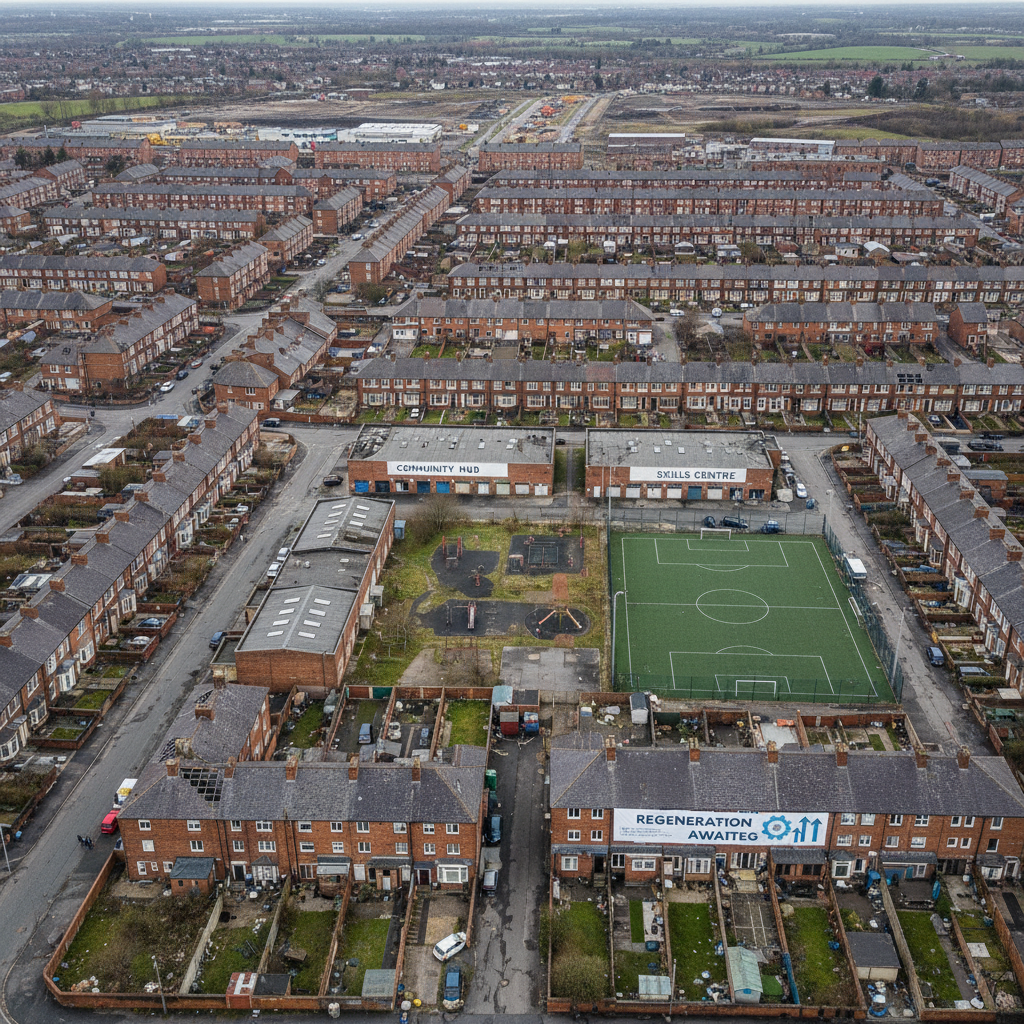
The UK government has unveiled a £175 million Community Wealth Fund targeting England's most deprived areas, giving residents direct control over spending decisions as part of its new Pride in Place strategy announced this week.
The decade-long programme will distribute between £1 million and £2.5 million to individual communities, with funding split equally between £87.5 million from the Dormant Assets Scheme and £87.5 million in match funding from The National Lottery Community Fund. Ministers say local residents will determine spending priorities, including community facilities and neighbourhood improvements.
Community-led spending decisions
Under the new framework, eligible communities will receive sustained funding over ten years rather than short-term grants. The government says this approach allows for longer-term planning and more substantial local projects than traditional funding models.
Ministers emphasise that spending decisions will rest with residents rather than central government, marking a shift towards what they describe as community-led regeneration. The strategy documents indicate that communities must demonstrate clear governance structures and local support before accessing funds.
Communities Secretary Angela Rayner described the programme as addressing decades of top-down regeneration failures. The funding model requires resident assemblies or community panels to oversee spending decisions, with mandatory consultation processes before major expenditure. Local authorities will provide administrative support but cannot override community choices on fund allocation.
Cross-party reactions highlight political divisions
Conservative MPs have questioned the programme's England-only scope, with former Levelling Up Secretary Michael Gove calling the geographic restrictions "divisive" during parliamentary exchanges this week. Labour backbenchers from northern England constituencies have welcomed the resident-led approach, contrasting it with previous regeneration schemes they describe as centrally imposed.
Liberal Democrat communities spokesperson Tim Farron criticised the exclusion of rural communities, arguing that deprivation indices favour urban areas despite significant rural poverty. The SNP's Westminster leader Stephen Flynn highlighted the programme's England-only status as evidence of continued centralisation despite Labour's devolution promises.
Community organisations across England have expressed cautious optimism, with the Community Development Foundation noting the ten-year commitment period as "unprecedented" for grassroots funding. However, several groups have raised concerns about capacity requirements, particularly for smaller communities lacking existing governance structures.
England-only programme raises devolution questions
The Pride in Place strategy applies exclusively to England, leaving Scotland's most deprived communities outside the programme despite contributing to the UK-wide tax base that funds such initiatives. This geographic limitation has renewed focus on funding disparities between England and Scotland's devolved administrations.
Scottish communities facing similar deprivation challenges must rely on separate funding streams through the Scottish government or compete for UK-wide programmes with different criteria and timescales. The Dormant Assets Scheme, which provides half the Pride in Place funding, draws from unclaimed financial products across the entire UK.
Analysis by the Institute for Fiscal Studies suggests Scottish communities receive proportionally less long-term regeneration funding than comparable English areas, despite higher deprivation rates in former industrial regions. The Scottish government's block grant formula does not specifically account for community wealth programmes, creating potential gaps in available resources.
Comparison with Scottish community funding landscape
Scotland operates its own community empowerment frameworks, including the Community Empowerment Act and various regeneration funds, but these typically offer smaller individual allocations over shorter periods. The Scottish government's community asset transfer programme and participatory budgeting initiatives share similar principles of local control, though with different funding mechanisms.
The ten-year commitment period in the Pride in Place model exceeds most Scottish community funding programmes, which often operate on annual or three-year cycles. This longer timeframe potentially allows for more ambitious infrastructure projects and sustained community development efforts.
Scottish community groups have noted that the largest comparable programme north of the border, the Community Led Regeneration Fund, offers maximum grants of £750,000 over five years - significantly less than the £2.5 million decade-long allocations available through Pride in Place. The Scottish Community Foundation estimates this funding gap affects approximately 200 communities that would qualify for the English programme based on deprivation metrics.
Implementation timeline and selection criteria
The government expects to begin accepting applications later this year, with first funding allocations scheduled for early 2025. Communities must meet deprivation criteria and demonstrate organisational capacity to manage substantial multi-year budgets.
Selection will prioritise areas with limited existing regeneration funding and strong evidence of community engagement. The Pride in Place strategy document indicates that successful applicants will need to show how their proposals address local priorities identified through resident consultation.
The Department for Communities and Local Government plans regional roadshows throughout autumn 2024 to explain application processes, with particular focus on supporting communities lacking previous grant experience. Officials estimate approximately 400 communities across England will meet the eligibility criteria, creating significant competition for the available funding.
The programme represents the largest community-controlled funding initiative in England for over a decade, though its exclusion of Scotland, Wales and Northern Ireland highlights ongoing tensions around place-based policy in the UK's devolved system. Scottish communities will be watching closely to see whether similar long-term, resident-led funding models emerge north of the border, particularly ahead of the Scottish government's 2025 spending review.