- Home
- News
- UK government announces £1bn flood recovery package for Scottish Borders and northern England
UK government announces £1bn flood recovery package for Scottish Borders and northern England
Emergency funding follows severe flooding between 19-21 July that caused widespread evacuations and infrastructure damage across the cross-border region.

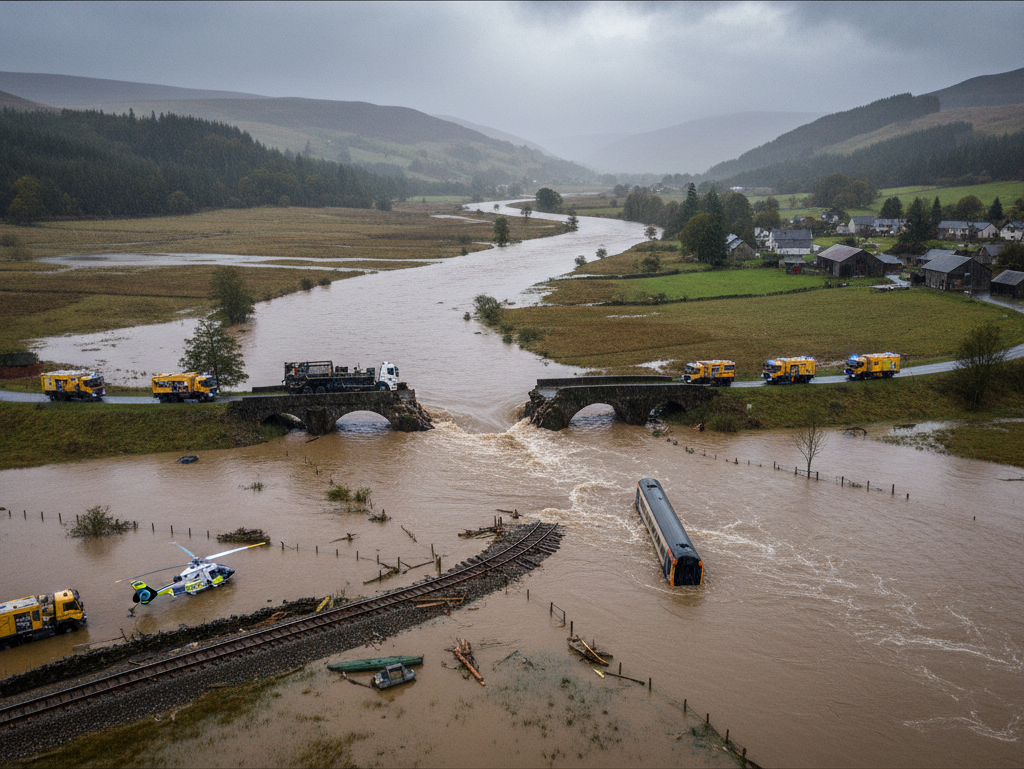
The UK government has announced a £1bn emergency support package for communities across northern England and the Scottish Borders following severe flooding and storm damage that struck the region between 19-21 July. The funding, confirmed on 22 July, will cover immediate clean-up operations, infrastructure repairs and additional support for affected households and businesses.
Torrential rain and strong winds over the three-day period led to widespread river flooding, forcing evacuations and causing extensive rail cancellations and power outages from Cumbria and Northumberland through to the Borders region. Ministers said details of funding allocations to local authorities would be set out in the coming days.
Cross-border infrastructure challenges emerge
The flooding has highlighted the interconnected nature of infrastructure across the England-Scotland border, with river systems, transport networks and power grids spanning both sides of the boundary. Scottish local leaders have called for clarity on how cross-border transport links and flood defences will be prioritised in the recovery effort.
The Borders region shares several major river catchments with northern England, including the Tweed and its tributaries, meaning flood management requires coordination between Scottish and English authorities. Rail services on the East Coast Main Line, which connects Edinburgh to London via Berwick-upon-Tweed, were among those severely disrupted during the flooding period.
Network Rail reported that flood damage to tracks and signalling equipment between Berwick and Dunbar will require at least three weeks of repairs, with replacement bus services operating during peak summer travel season. The A1 trunk road, a critical transport artery for cross-border commerce, suffered significant damage at multiple points, with temporary traffic management expected to remain in place through August.
Local authorities seek funding details
Scottish Borders Council and Northumberland County Council are among the authorities awaiting confirmation of their specific allocations from the £1bn package. The funding is expected to cover emergency accommodation costs, road repairs, bridge assessments and support for businesses forced to close during the flooding.
Power companies reported that thousands of properties across the region lost electricity supply, with some remote communities in the Borders remaining without power for more than 48 hours. The emergency package includes provisions for infrastructure resilience improvements to prevent similar widespread outages.
Scottish Borders Council leader John Mitchell said the authority had already spent £2.3m on emergency response measures, including temporary accommodation for 150 households evacuated from flood-prone areas in Hawick and Jedburgh. Northumberland County Council reported similar emergency expenditure of £1.8m, with particular pressure on resources in Hexham and surrounding villages where the River Tyne burst its banks.
Business groups across the region have welcomed the funding announcement but called for swift processing of claims. The Federation of Small Businesses estimates that more than 400 enterprises in the Scottish Borders alone suffered flood damage, with many facing insurance excess payments that could threaten their viability during the crucial summer trading period.
Warning over future extreme weather
Scottish local leaders have warned that more extreme weather events will test existing resilience plans across the cross-border region. The July flooding marks the second significant weather event to affect the area this year, following winter storms in February that caused similar disruption to transport and power networks.
Climate projections suggest the region could face more frequent severe weather events, raising questions about the adequacy of current flood defences and emergency response protocols. The Borders region's geography, with its river valleys and upland areas, makes it particularly vulnerable to rapid flooding when heavy rainfall combines with saturated ground conditions.
Environmental scientists at Edinburgh University have noted that the July rainfall totals exceeded 200% of the monthly average in some areas, with the River Tweed reaching its highest recorded level since monitoring began in 1963. The combination of steep topography and increasingly intense rainfall events creates particular challenges for flood management across the England-Scotland border.
The Scottish Environment Protection Agency has announced plans to review flood warning systems across the region, with particular focus on improving early warning capabilities for cross-border river catchments where coordination between Scottish and English agencies proved challenging during the emergency response.
Recovery timeline and next steps
Government ministers indicated that the first tranche of emergency funding would be released within days, with priority given to restoring essential services and clearing debris from transport routes. Longer-term infrastructure repairs, including assessments of flood defences along cross-border river systems, are expected to continue into the autumn.
The announcement comes as weather forecasters predict continued unsettled conditions across northern Britain, though no immediate severe weather warnings are in place. According to the BBC report, the government's response represents one of the largest emergency funding packages for flood recovery in recent years.
Local authorities are expected to receive detailed guidance on funding applications by the end of the week, with the government promising streamlined processes to ensure rapid deployment of resources to affected communities. The cross-border nature of the flooding response will require close coordination between Scottish and English agencies throughout the recovery period.
Treasury officials confirmed that the £1bn package includes £300m specifically earmarked for cross-border infrastructure projects, recognising the unique challenges posed by managing recovery efforts across different administrative jurisdictions. A joint Scottish-English recovery committee will oversee the distribution of these funds, with the first meeting scheduled for 29 July.