Scottish Government takes control of major data centre planning decisions
New planning direction requires councils to notify ministers of applications over 50 megawatts within seven days, as £300 million AI Growth Zone launches in North Lanarkshire.


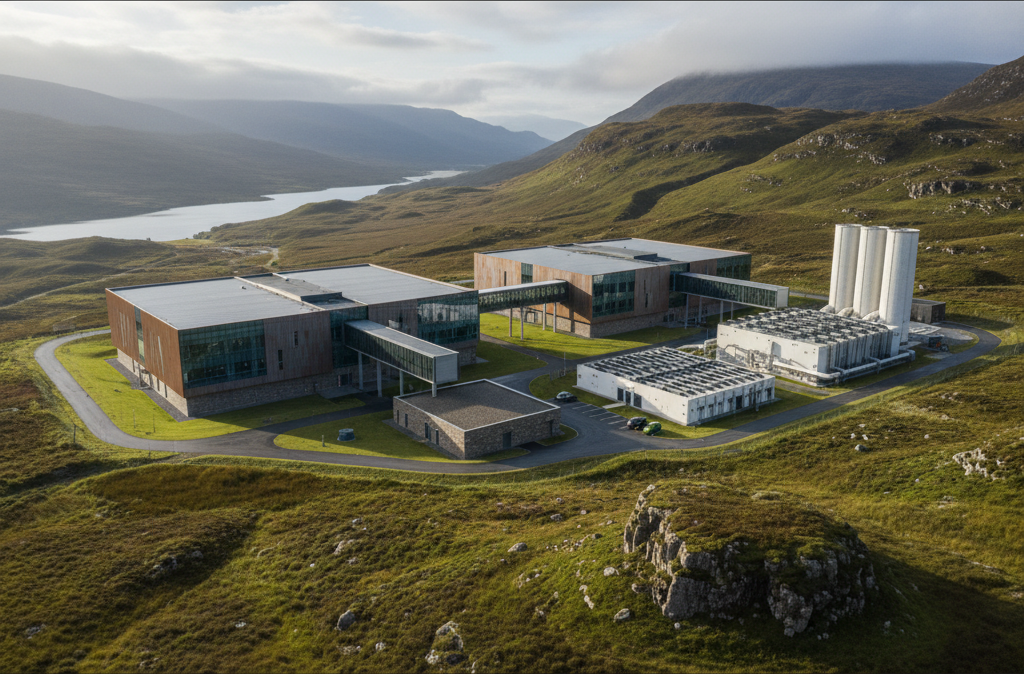
The Scottish Government has issued a new planning direction requiring local authorities to notify ministers of major data centre applications within seven days of receipt, particularly those using more than 50 megawatts of power. The measure, announced on 17 August 2026, gives central government greater oversight of large-scale data infrastructure projects across Scotland.
The timing coincides with the launch of Scotland's first AI Growth Zone in North Lanarkshire, where a £300 million financing package backed by the UK National Wealth Fund and a syndicate of lenders will support two large data centres and associated infrastructure. The investment, announced on 18 August, is expected to support more than 3,400 jobs and unlock over £8 billion in private investment.
Economic opportunities drive policy shift
Ministers have positioned the planning direction as a mechanism to harness economic opportunities from data centres whilst addressing concerns about their environmental and community impact. The North Lanarkshire project exemplifies the scale of investment at stake, with the government emphasising its role in strengthening domestic AI compute capacity.
The £300 million financing package represents a significant commitment to Scotland's technology infrastructure, with the project expected to generate substantial private sector investment beyond the initial government backing. The 3,400 jobs figure includes both direct employment at the data centres and indirect positions in supporting industries including construction, maintenance, and specialised technical services.
Industry analysts suggest the North Lanarkshire development could establish Scotland as a competitive alternative to data centre hubs in Ireland and the Netherlands, where planning constraints and energy costs have become increasingly challenging for major operators. The Scottish Government's proactive approach contrasts with reactive planning policies elsewhere in Europe, where data centre growth has often outpaced regulatory frameworks.
Central oversight replaces local autonomy
Under the new direction, local planning authorities must inform Scottish Ministers within seven days of receiving applications for data centres exceeding the 50-megawatt threshold. This represents a shift from purely local decision-making to a system where central government maintains awareness and potential influence over major projects.
The measure effectively centralises oversight of Scotland's largest data infrastructure developments, allowing ministers to monitor applications that could have significant economic and environmental implications. The seven-day notification requirement ensures rapid government awareness of major proposals across all Scottish local authority areas.
Local planning committees will retain authority over detailed assessments and final decisions, but the notification system enables ministerial intervention where projects align with national economic priorities or raise concerns about cumulative environmental impact. This dual-layer approach aims to preserve local democratic input whilst ensuring strategic coordination across Scotland's 32 local authorities.
Environmental concerns shape government response
The planning direction acknowledges growing concerns about data centres' environmental and community impact, particularly regarding energy consumption and local infrastructure strain. Data centres using more than 50 megawatts represent substantial power demands that can affect regional electricity grids and environmental targets.
Ministers have framed the new oversight as balancing economic opportunity with responsible development, suggesting future applications will face scrutiny over their environmental credentials alongside their economic benefits. The North Lanarkshire project will likely serve as a template for how government evaluates the trade-offs between AI infrastructure development and environmental considerations.
Energy sector experts note that Scotland's renewable electricity generation capacity provides advantages for data centre operators seeking to meet corporate sustainability commitments. The country's wind and hydroelectric resources could support data centre growth without proportional increases in carbon emissions, provided grid infrastructure can accommodate the additional demand.
However, concerns remain about peak load management and the potential need for backup power systems during periods of low renewable generation. The government's oversight role may include requirements for energy storage integration and demand response capabilities in future major projects.
AI infrastructure becomes economic priority
The AI Growth Zone designation for North Lanarkshire signals the Scottish Government's commitment to positioning Scotland within the global artificial intelligence economy. The project aims to strengthen domestic AI compute capacity, reducing reliance on international infrastructure for Scottish businesses and research institutions.
The £8 billion private investment projection suggests significant multiplier effects from the initial government investment. This scale of private sector engagement indicates confidence in Scotland's potential as an AI infrastructure hub, with the North Lanarkshire zone potentially attracting additional technology companies and research facilities.
Universities and research institutions across Scotland have expressed interest in accessing the enhanced computing resources, with potential applications ranging from climate modelling to pharmaceutical research. The proximity to Glasgow and Edinburgh provides access to skilled workforces and established technology clusters.
The planning direction will apply to future major data centre applications across Scotland, establishing a framework for government oversight as the sector expands. With AI infrastructure becoming increasingly critical to economic competitiveness, the new system positions Scottish Ministers to influence the location and scale of future developments whilst maintaining local planning authority involvement in the detailed assessment process.
Further announcements regarding additional AI Growth Zones and supporting infrastructure investments are expected before the end of 2026, according to the Daily Business Group report, as the government seeks to establish Scotland as a leading destination for AI and data infrastructure investment across Europe.